
Net Zero Energy Buildings
Net Zero Energy Buildings
Summary
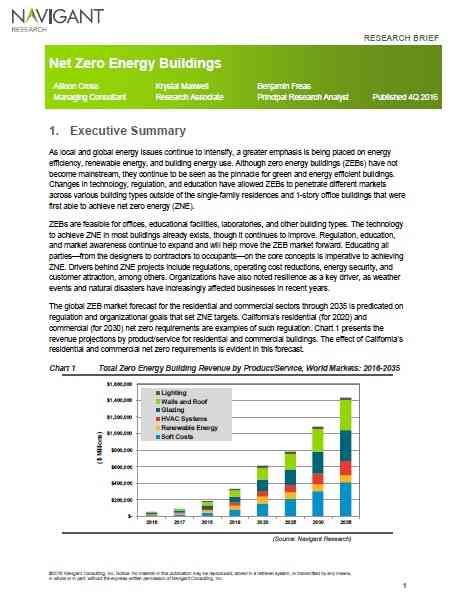
As local and global energy issues continue to intensify, a greater emphasis is being placed on energy efficiency, renewable energy, and building energy use. Although zero energy buildings (ZEBs) have not become mainstream, they continue to be seen as the pinnacle for green and energy efficient buildings. Changes in technology, regulation, and education have allowed ZEBs to penetrate different markets across various building types outside of the single-family residences and 1-story office buildings that were first able to achieve net zero energy (ZNE).
ZEBs are feasible for offices, educational facilities, laboratories, and other building types. The technology to achieve ZNE in most buildings already exists, though it continues to improve. Regulation, education, and market awareness continue to expand and will help move the ZEB market forward. Educating all parties?from the designers to contractors to occupants?on the core concepts is imperative to achieving ZNE. Drivers behind ZNE projects include regulations, operating cost reductions, energy security, and customer attraction, among others. Organizations have also noted resilience as a key driver, as weather events and natural disasters have increasingly affected businesses in recent years.
This Navigant Research report analyzes the global market for ZNE buildings in the residential and commercial sectors. The study examines the major changes in the ZNE buildings market in the last few years, as well as issues that are keeping the market from taking off or becoming more mainstream. Key technology and design trends are analyzed, with a focus on analysis tools and design methods. The report also examines the regulations and education and outreach programs related to ZNE buildings.